
Top Biocompatible Implant Materials for Global Sourcing
Choosing the right Biocompatible implant materials requires more than comparing prices or supplier catalogs. Materials must perform safely inside the human body, often for years, under movement, pressure, moisture, and changing temperature.
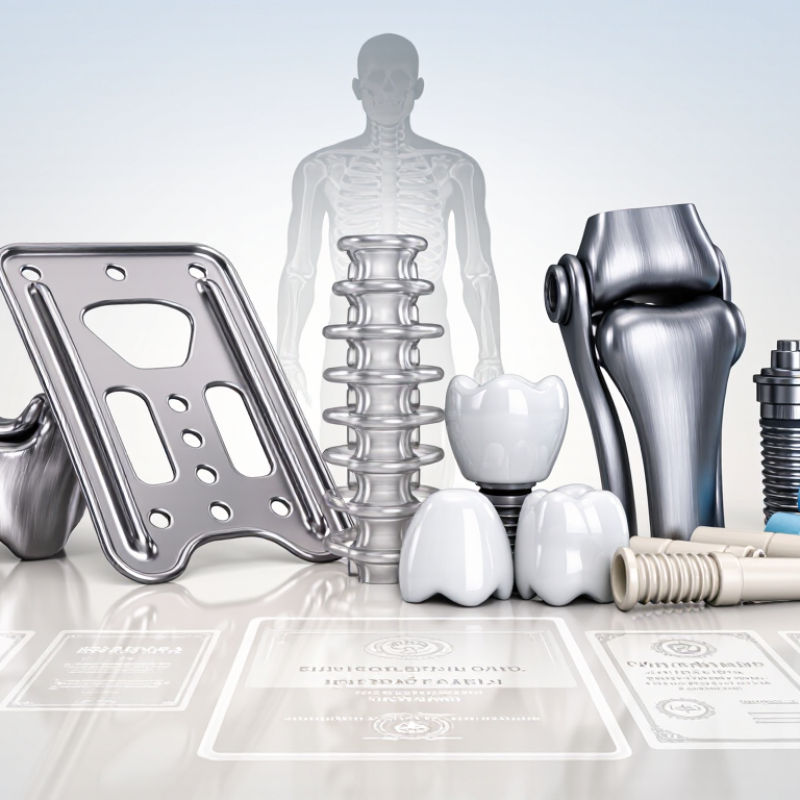
This guide examines widely sourced options, including titanium alloys, medical-grade stainless steel, cobalt-chromium alloys, PEEK, UHMWPE, ceramics, and absorbable polymers. Each material offers distinct benefits. Titanium is lightweight and corrosion resistant. PEEK can support radiolucent designs. Ceramics provide excellent wear performance, but they may require careful handling. Small differences matter.
Global sourcing adds another layer of responsibility. Buyers should review material certificates, traceability records, manufacturing controls, sterilization compatibility, and test evidence. ISO 10993 biological evaluation can support risk assessment, but it does not replace device-specific testing. Regulatory expectations also vary between markets. A supplier with attractive samples may still lack consistent batch control.
Look beyond the brochure.
Practical experience shows that material selection often changes during prototyping. A polymer may machine well but deform under repeated load. A metal may meet strength targets but complicate imaging or finishing. These trade-offs deserve honest discussion, not confident promises. This overview focuses on evidence-based comparisons and supplier evaluation, while recognizing one limitation: no universal ranking fits every implant design. Engineers, clinicians, quality teams, and procurement specialists should confirm final choices through documented verification and applicable regional requirements. Reliable sourcing begins with transparency, technical communication, and a clear understanding of how each material behaves in its intended clinical environment.
Biocompatibility Criteria for Implant Materials
Biocompatibility begins with the patient’s exposure, not the material’s reputation. The U.S. FDA’s 2023 guidance, aligned with ISO 10993-1, separates contact into limited, prolonged, and permanent durations. These periods mean up to 24 hours, over 24 hours to 30 days, and beyond 30 days. Longer exposure demands stronger evidence for toxicity, sensitization, implantation effects, and degradation products. A polished surface can still fail if cleaning chemicals remain trapped in microscopic scratches.
Material screening should combine chemistry, mechanics, and clinical use. The ASM Handbook reports an elastic modulus of roughly 105–120 GPa for titanium alloy Ti-6Al-4V. Cortical bone typically measures about 7–30 GPa. This mismatch may contribute to stress shielding around load-bearing implants. It is not an automatic rejection, but it deserves review. ISO 10993-18:2020 also supports chemical characterization, including extractables and leachables under realistic conditions. Water alone may miss an important contaminant.
Global sourcing complicates verification. Suppliers should document alloy composition, surface treatment, sterilization compatibility, and lot traceability. ASTM F2129 testing can assess corrosion behavior in simulated physiological conditions, but results depend on solution chemistry and test design. No single certificate proves clinical safety. That assumption is tempting, and often wrong. Manufacturing changes, packaging residues, and storage humidity can alter the final biological profile. Independent testing remains necessary before approving a new source.
Key Classes of Biocompatible Implant Materials
Top Biocompatible Implant Materials for Global Sourcing
Key Classes of Biocompatible Implant Materials
Metals remain central in load-bearing implants. Titanium alloys offer a strong strength-to-weight ratio and support bone integration. Cobalt-chromium alloys resist wear under repeated joint motion. Stainless steel remains practical for temporary fixation devices. ASTM and ISO testing still require attention to corrosion, fatigue, and nickel release. Traceability matters.
Polymers serve where flexibility, low mass, or controlled degradation is needed. Ultra-high-molecular-weight polyethylene is common in bearing surfaces. PEEK supports radiolucent spinal and trauma components. Resorbable polymers, including PLA and PGA families, gradually break down after healing.
A 2024 MarketsandMarkets report estimates the medical polymer market could exceed USD 30 billion by 2029. Forecasts differ, partly because definitions include non-implant products.
Ceramics offer chemical stability and low wear. Alumina and zirconia-based materials are used in selected joint and dental applications. Their brittleness demands careful design and impact testing. Bioactive glass and calcium-phosphate ceramics can encourage bone bonding.
The U.S. FDA’s guidance aligned with ISO 10993 emphasizes biological evaluation across the finished device, not merely the raw material. That distinction is often missed during global sourcing.
Composite implants combine polymers, ceramics, or fibers to balance stiffness and toughness.
A 2023 industry review in Materials Today Bio reported that additive manufacturing is expanding porous implant research, although long-term clinical evidence remains uneven. More data is still needed.
Material Properties and Clinical Applications
Global sourcing of implant materials requires more than price comparisons. It demands evidence on strength, corrosion resistance, sterilization, and tissue response.
A 2024 Grand View Research report estimated the global orthopedic implants market at over USD 50 billion, reflecting sustained clinical demand. However, market size does not prove clinical suitability.
Titanium alloys remain widely used because they combine low density, fatigue strength, and favorable bone integration.
Their elastic modulus is closer to bone than stainless steel, which may reduce stress shielding.
Cobalt-chromium alloys offer greater wear resistance and hardness, making them useful in load-bearing joint components.
Polyether ether ketone, or PEEK, provides radiolucency and a bone-like modulus.
Its surface is often modified because untreated PEEK may bond poorly with bone.
That limitation matters.
Ceramics provide excellent wear performance in selected joint applications. Yet brittleness and manufacturing precision require strict quality controls.
A 2023 MarketsandMarkets report projected continued growth in the global biomaterials market, driven partly by orthopedic and dental applications.
These forecasts support investment, but they can hide regional differences in regulation, hospital capacity, and surgical practice.
Suppliers should request traceability records, sterilization validation, fatigue data, and biocompatibility testing under ISO 10993.
Clinical evidence should match the intended anatomy, not merely the material name.
No material is perfect.
Procurement teams sometimes overvalue impressive laboratory results and undervalue handling, imaging compatibility, or revision surgery needs.
Global Sourcing Standards and Supplier Evaluation
Top Biocompatible Implant Materials for Global Sourcing
Global sourcing of implant materials requires more than comparing price and delivery time. Titanium alloys, PEEK, ceramics, and medical-grade stainless steel each need evidence of biological safety, processing control, and consistent performance. Suppliers should provide material specifications, lot traceability, sterilization data, and test reports linked to recognized standards such as ISO 10993 and ISO 13485. Requirements may differ by market, so a familiar certificate is not always enough.
Evaluate suppliers through documented audits, technical interviews, and controlled sample reviews. Check whether their testing laboratory is competent and whether reports identify methods, dates, and sample numbers. Ask how they manage raw-material changes, equipment maintenance, nonconforming batches, and supplier disruptions. A clean facility helps, but it does not prove process stability. In practice, small details matter: a missing heat-treatment record or unclear packaging seal can delay approval. Some evaluations still rely too heavily on paperwork. That weakness deserves attention.
Tips: Request three recent production lots, not one ideal sample. Compare dimensions, surface finish, and mechanical results. Confirm retention periods for quality records. Review change-notification timelines in the supply agreement. Ask for a corrective-action example; real responses reveal more than polished presentations. Keep a second qualified source when practical, but do not assume dual sourcing removes every risk. Supplier performance should be reviewed after delivery, not only during onboarding.
Regulatory, Quality, and Supply Chain Considerations
Global sourcing of implant materials begins with intended use, not price. Titanium, PEEK, cobalt-chromium alloys, and ceramics each create different biological and manufacturing risks. Suppliers should map material chemistry to ISO 10993 biological evaluation and ISO 13485 quality controls. The FDA’s FY2023 Medical Device Reporting Annual Report recorded more than one million submissions. Traceable evidence matters after market entry. A certificate alone is not enough. That assumption fails.
Regulatory files need material specifications, impurity limits, sterilization compatibility, and change-notification rules. For titanium, oxygen and nitrogen levels can affect fatigue performance. For polymers, resin identity, molecular weight, and processing history need documented controls. Independent testing should cover cytotoxicity, sensitization, irritation, and mechanical performance. ASTM and ISO methods improve comparability, but laboratories still vary. I would require raw-data access, not polished summaries. The ISO Survey 2023 reported tens of thousands of ISO 13485 certificates worldwide. Certification supports discipline, not automatic conformity.
Supply continuity needs more than a second vendor on paper. Audit melting, machining, cleaning, packaging, and sterilization locations. Record lot genealogy through the finished implant. Track lead times, minimum order quantities, customs exposure, and geographic concentration. The World Bank’s Commodity Markets Outlook 2024 highlighted continued volatility across industrial inputs. This matters during long qualification cycles. Dual sourcing can also create inconsistent surface roughness or porosity. Requalification costs are real. A six-to-twelve-month buffer may help, but actual consumption data should challenge that estimate.
Top Biocompatible Implant Materials for Global Sourcing
Representative density comparison for common implant material classes
Lower-density materials can reduce implant weight, while metals generally provide higher stiffness and established machining routes. Final sourcing decisions should also verify ISO 10993 biological evaluation, sterilization compatibility, lot-to-lot quality controls, traceability, and regional regulatory requirements. Values shown are representative typical densities at room temperature.
Related Posts
-
How to Choose Biocompatible Implant Materials for Your Medical Needs?
-

Top 10 Biocompatible Implant Materials in China for Medical Applications
-
China Top 10 Minimally Invasive Arthroplasty Techniques You Should Know?
-

Top Prosthesis Fixation Methods You Should Know?
-
Top 10 Femoral Hip Stems for Global Procurement Needs?
-

How to Choose Post Operative Recovery Strategies in 2026?