How to Choose Biocompatible Implant Materials for Medical Applications?
Choosing biocompatible implant materials is crucial in the medical field. These materials must interact safely with the human body. They should minimize adverse reactions and promote healing. Selecting the right materials can influence a patient’s recovery significantly.
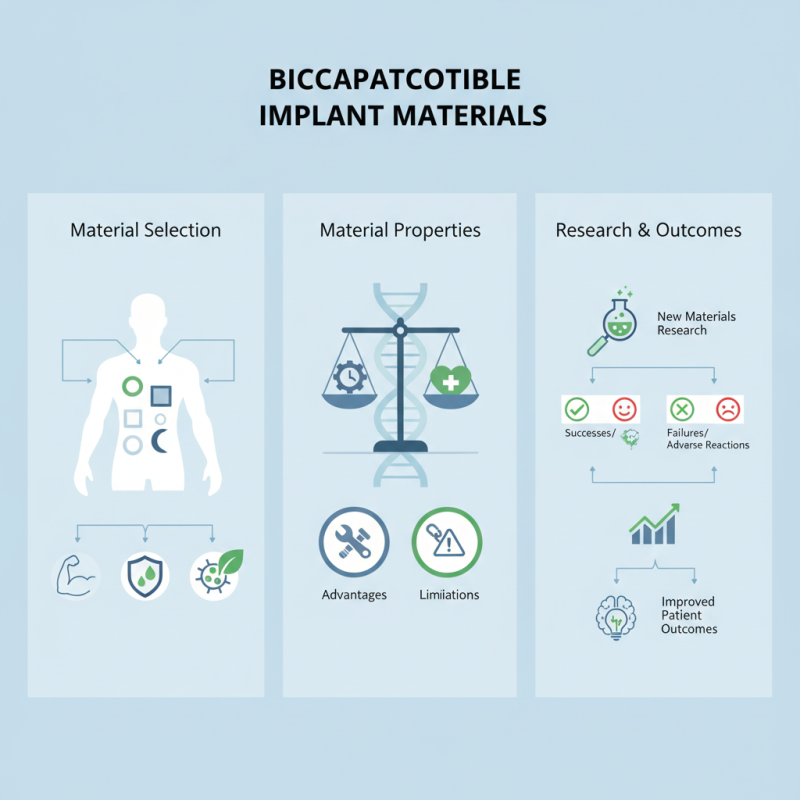
Medical professionals face challenges in this selection process. What works for one patient may not work for another. Each material has its properties, advantages, and limitations. Factors such as material strength, corrosion resistance, and tissue compatibility are critical. A balance must be struck between durability and biocompatibility.
Research in this field is ongoing. New materials are emerging, offering promising results. However, the effectiveness of biocompatible implant materials still requires thorough testing. Case studies show both successes and failures. Each instance provides valuable lessons for future applications. Understanding these dynamics is key to improving patient outcomes.
Understanding Biocompatibility: Definition and Importance in Implants
Biocompatibility is crucial in medical implants. It refers to a material's ability to perform safely with living tissues. The FDA defines biocompatibility as the ability to integrate into the body without causing adverse reactions. Reports indicate that up to 10% of patients experience complications from metal and polymer implants due to poor biocompatibility. This underlines the importance of choosing the right materials for implant applications.
Various factors influence biocompatibility, such as chemical composition, surface properties, and mechanical strength. For instance, titanium alloys are widely used for orthopedic implants due to their corrosion resistance and mechanical performance. A study from the Journal of Biomedical Materials Research revealed that titanium implants have an 85% success rate in orthopedic settings. This statistic highlights the importance of material selection in reducing postoperative complications.
Despite advancements, selecting biocompatible materials is not perfect. The body reacts differently to various materials, leading to unexpected outcomes. Clinical trials are essential to test new materials, but they often take years to complete. Researchers are exploring innovative materials, like biodegradable polymers, which might offer better integration with body tissues. Continuous research is necessary to understand the long-term effects of newly developed biomaterials.
Biocompatible Implant Materials Comparison
Key Properties of Biocompatible Materials for Medical Use
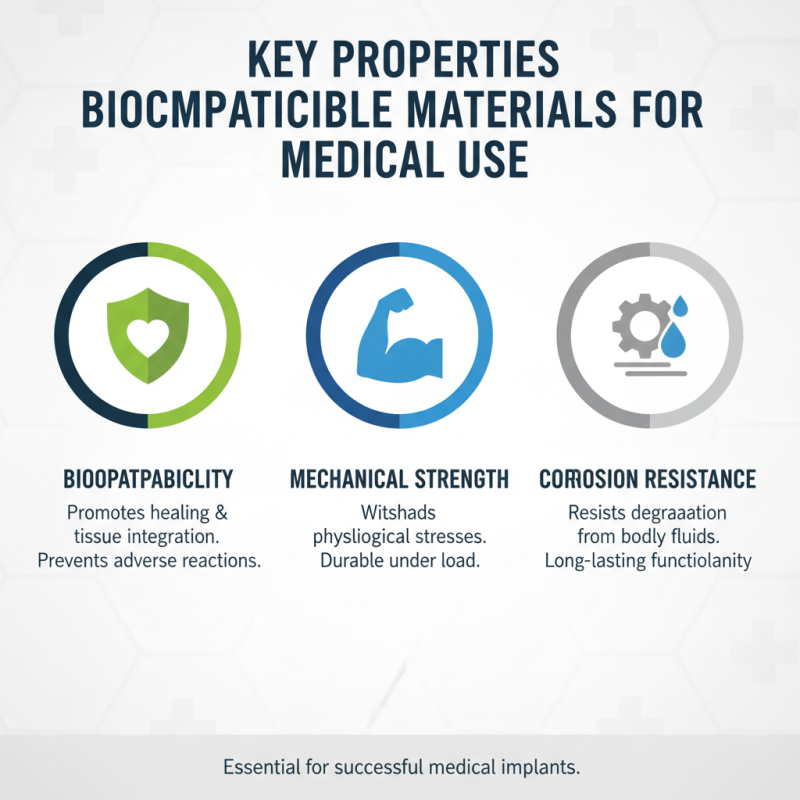
Selecting biocompatible implant materials is essential for successful medical applications. The right material must promote healing and integrate well with body tissues. Key properties include biocompatibility, mechanical strength, and corrosion resistance. Biocompatibility ensures that the material does not provoke an adverse reaction in the body. This property is crucial, as it determines how well the implant will function over time.
Mechanical strength is another critical factor. Implants must withstand everyday stresses without failure. They should also maintain their shape and support surrounding tissues. Corrosion resistance protects the implant from degradation within the body. If a material corrodes, it can lead to serious complications. However, achieving the perfect balance of these properties can be challenging.
Moreover, some materials may perform well in the lab but fail in the body. Researchers must continually test and refine their choices. While advances exist, not every innovative material proves viable for long-term use. The complexity of bodily reactions adds layers of uncertainty. Hence, ongoing evaluation and adaptation are vital in material selection.
Essential Testing Methods for Assessing Biocompatibility
Choosing biocompatible materials for medical implants is crucial. Essential testing methods help ensure these materials are safe for the human body.
Biocompatibility encompasses interactions between materials and biological systems. Industry studies reveal that nearly 40% of implant failures are linked to inadequate biocompatibility assessments.
In vitro and in vivo testing are standard approaches. In vitro tests often involve cell cultures to evaluate cytotoxicity and cell adhesion. These assessments provide initial insights. However, they may not fully capture complex biological responses. On the other hand, in vivo testing uses living organisms to monitor long-term effects. Reports indicate around 70% of material assessments need both testing types for comprehensive evaluation.
Moreover, ISO 10993 is an internationally recognized standard for testing biocompatibility. It outlines different test methods, including irritation and sensitization assessments. Despite its thorough nature, the standard has room for improvement. Some researchers argue it may overlook specific patient factors. Continuous advancements in testing methods are vital to address these gaps and enhance reliability.
Commonly Used Biocompatible Materials in Medical Implants
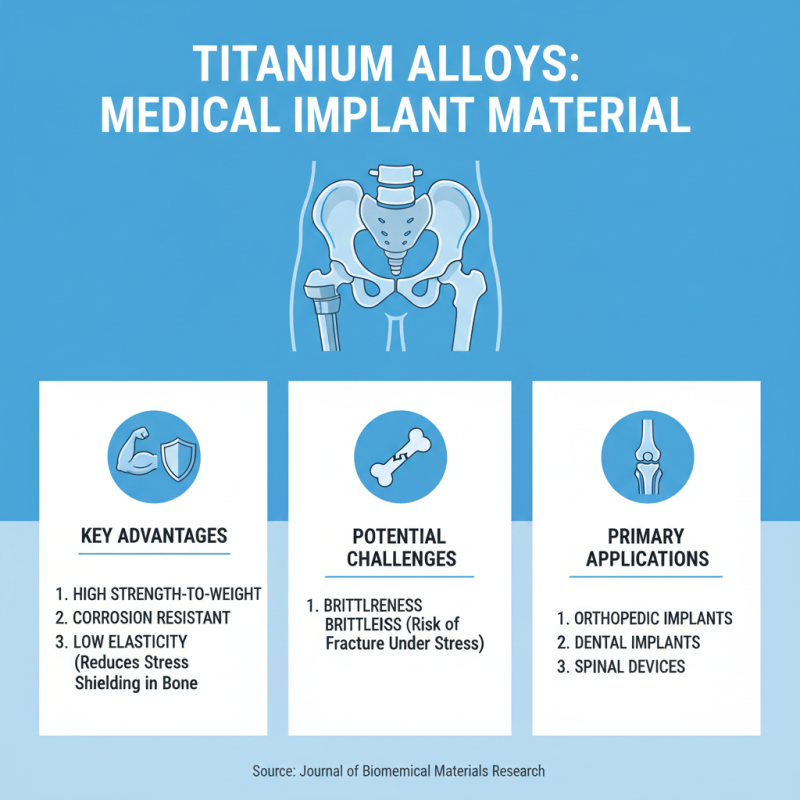
When selecting biocompatible materials for medical implants, several options are widely used in the industry. Titanium alloys stand out due to their excellent strength-to-weight ratio and corrosion resistance. A report from the Journal of Biomedical Materials Research indicates that titanium has a low modulus of elasticity, which helps to reduce stress shielding in bone applications. However, its brittleness can sometimes lead to fractures under stress.
Ceramics, particularly bioceramics like hydroxyapatite, are another common choice. They exhibit outstanding biocompatibility and can support bone integration. Research shows that hydroxyapatite promotes bone growth effectively. However, forming complex shapes from ceramics can be challenging, which limits their application in certain implants.
Polymers also play a critical role in the field. Materials such as polyethylene are frequently used due to their flexibility and impact resistance, making them ideal for joint replacements. However, their long-term degradation may pose concerns, as reported by the International Society for Biomaterials. Each material's advantages and limitations must be carefully weighed in the design of medical implants. This balance is essential for achieving optimal patient outcomes.
Factors Influencing the Selection of Implant Materials for Specific Applications
When selecting biocompatible implant materials, various factors come into play. The intended application significantly influences material choice. For load-bearing implants, such as joint replacements, high strength and durability are crucial. Conversely, materials for soft tissue implants prioritize flexibility and biocompatibility.
Mechanical properties, such as fatigue resistance and tensile strength, should be evaluated thoroughly. Surface properties, like roughness and hydrophilicity, affect cell adhesion and integration with surrounding tissues. An optimal surface treatment can enhance these aspects. Furthermore, degradation rates are vital in biodegradable implants. An imbalance can lead to premature failure or inflammatory responses.
Another important factor is the potential for corrosion and wear. Long-term stability of the implant is essential. Bioactive materials may promote tissue regeneration but can also present challenges in controlling the release of ions. Understanding patient-specific factors, such as allergy history and metabolic conditions, is crucial. Adapting to individual needs ensures better outcomes, but it requires ongoing research and testing to refine material selection effectively.
How to Choose Biocompatible Implant Materials for Medical Applications?
| Material Type |
Biocompatibility Rating |
Mechanical Properties |
Common Applications |
Cost ($/kg) |
| Titanium |
Excellent |
High strength, Low weight |
Orthopedic implants, Dental implants |
30-50 |
| Ceramics |
Good |
High compressive strength, Low toughness |
Dental crowns, Bone grafts |
100-200 |
| Polymers |
Moderate |
Variable strength, Lightweight |
Vascular grafts, Sutures |
10-50 |
| Cobalt-chromium alloy |
Good |
High strength, Corrosion resistant |
Cardiac stents, Joint replacements |
60-120 |