Exploring the Benefits of Minimally Invasive Arthroplasty in China Best Practices?
Minimally invasive arthroplasty (MIA) is gaining traction in China. This approach promises reduced recovery times and less postoperative pain. According to a study published by the Chinese Journal of Orthopaedics, MIA can decrease hospital stays by up to 30%. These advantages align with the growing demand for efficient healthcare solutions in urban areas.
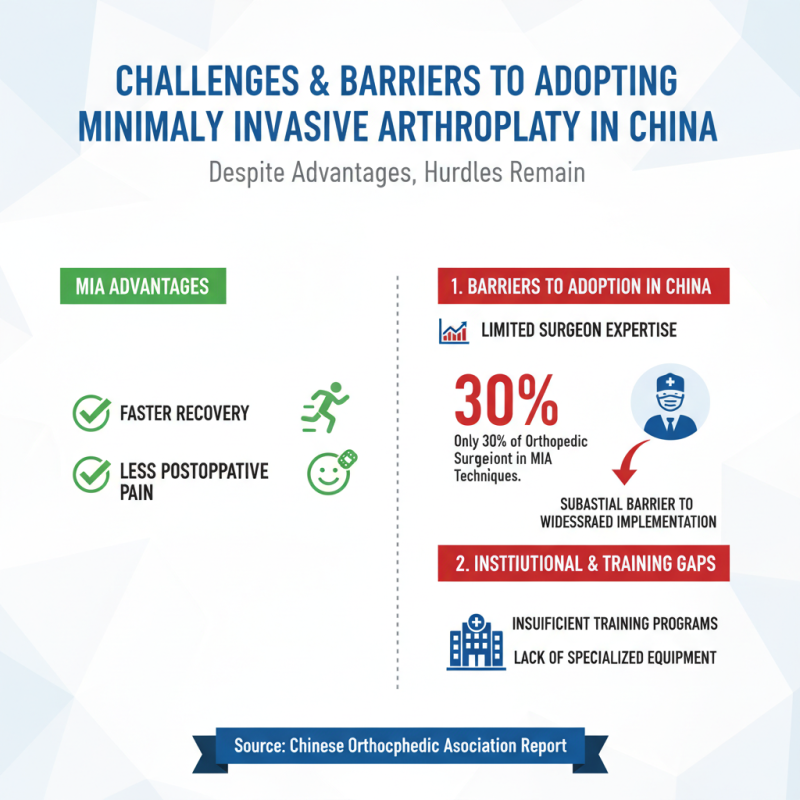
Despite these benefits, the adoption of MIA faces challenges. Limited surgeon experience and the availability of specialized equipment can hinder progress. A report from the China Orthopaedic Association highlights that less than 40% of surgeons are trained in these techniques. This gap suggests a need for targeted education and resources in the field.
The potential of minimally invasive arthroplasty relies on continuous improvement. While early results are promising, tracking long-term outcomes remains essential. Ongoing research and collaboration among healthcare institutions can foster best practices and enhance the quality of care. There is much to explore in this evolving landscape.

Benefits of Minimally Invasive Arthroplasty for Patients in China
Minimally invasive arthroplasty (MIA) is significantly changing the landscape of orthopedic surgery in China. This technique reduces the size of incisions, leading to quicker recovery times. Patients often report less pain and shorter hospital stays. A recent study highlighted that many patients resume daily activities much sooner than with traditional methods. This is a pivotal improvement for those facing joint issues.
However, challenges remain. Not all surgical teams in China have equal access to the advanced training required for MIA. Some hospitals may still rely on conventional methods due to resource constraints. This inconsistency can affect patient outcomes and access to the benefits of MIA. Furthermore, the long-term effectiveness of these newer approaches is still being studied.
Educational programs are essential to bridge this gap. More training and workshops could empower surgeons with advanced skills. By fostering a culture of continual learning, we can enhance patient care and outcomes in Chinese healthcare. Collaboration among healthcare professionals is vital to overcome these barriers and ensure that patients across all regions enjoy the benefits of minimally invasive procedures.
Comparison of Traditional vs. Minimally Invasive Arthroplasty Techniques
Minimally invasive arthroplasty (MIA) techniques are gaining traction in China. This approach contrasts sharply with traditional methods. Surgeons make smaller incisions, which reduces tissue damage. Patients experience less pain and a quicker recovery. In a bustling healthcare environment, efficiency is paramount.
However, MIA isn’t without challenges. The learning curve for surgeons can be steep. Many hospitals lack adequate training programs. Patients might have uneven access to skilled practitioners. Such disparities can lead to inconsistent outcomes. It’s essential to address these gaps for broader adoption.
Traditional arthroplasty techniques offer reliable results, especially for complex cases. Larger incisions allow for a more comprehensive view during surgery. Yet, lengthy recovery times can hinder patient mobility. Comparing these two approaches reveals a complex landscape, requiring ongoing research and adaptation.
Best Practices for Implementing Minimally Invasive Techniques in China
Minimally invasive arthroplasty (MIA) is transforming orthopedic practices in China. This technique significantly reduces recovery time and improves patient outcomes. A recent report from the Chinese Orthopedic Association highlights that MIA can decrease postoperative pain by up to 50%. Implementation of these techniques, however, is not without challenges.
Training surgeons in MIA is essential. Many orthopedic practitioners lack exposure to these methods. A study showed that only 30% of orthopedic surgeons in major hospitals received specialized training in minimally invasive techniques. This gap can lead to inconsistent outcomes. Surgeons need access to quality resources and ongoing education to stay current.
Collaboration with international experts can help bridge the knowledge gap. Hosting workshops and conferences can foster knowledge exchange. Hospitals must create an environment that supports continuous learning. Regular evaluations of surgical outcomes are key to improving practices. Highlighting both successes and failures is crucial for growth in the field. Emphasis on patient feedback and outcomes should guide future strategies.
Challenges and Barriers to Adopting Minimally Invasive Arthroplasty
Minimally invasive arthroplasty (MIA) presents significant advantages over traditional surgery, particularly in terms of recovery time and postoperative pain. However, in China, the adoption of MIA faces several challenges. A report by the Chinese Orthopaedic Association highlights that only 30% of orthopedic surgeons are proficient in MIA techniques. This limited expertise is a substantial barrier to widespread implementation.
Another critical issue is the financial aspect. Many hospitals in China lack the necessary funding to invest in advanced surgical instruments and training for MIA. According to a national healthcare survey, up to 40% of patients still opt for traditional arthroplasty due to cost concerns. Compounding this issue is the relative scarcity of clinical data supporting long-term outcomes of MIA compared to traditional methods. Many surgeons remain cautious, often opting for methods with which they are more familiar.
Cultural attitudes and patient expectations also play a role. Many patients have traditional beliefs about surgery and may be skeptical of new techniques. A 2022 study showed that 25% of patients prefer conventional approaches, fearing that newer procedures might not be as effective. This skepticism hinders the acceptance and promotion of MIA practices across the healthcare landscape in China. Addressing these barriers is essential for realizing the full potential of minimally invasive procedures.
Future Trends and Innovations in Arthroplasty Practices in China
Minimally invasive arthroplasty (MIA) is transforming orthopedic surgery in China. With advancements in technology, the future looks promising. Robotic-assisted surgeries are gaining traction. These innovations enhance precision, potentially improving patient outcomes. Surgeons are learning to adapt these new methods.
Emerging trends in MIA focus on patient recovery. Faster recovery times and reduced complications are significant goals. Enhanced imaging techniques allow for better pre-operative planning. Surgeons can tailor procedures to individual needs. This personalized approach could reshape how arthroplasties are performed.
Tips for patients considering MIA include asking about the surgeon's experience with new technologies. Research the latest techniques available in your area. Stay informed about recovery expectations. Engage in discussions with healthcare providers about the benefits and risks. Patients should be proactive in their healthcare decisions as innovations evolve. Understanding these trends can empower individuals on their path to recovery.